Home Blog

Rwanda: Explore the Land of a Thousand Hills

0

Ranked by the Gallup Report as Africa’s second safest country, Rwanda’s indicators are impressive and show that for 100,000 residents, the country has on average 2,5 murders per year. That is the lowest crime rate compared to other African countries.

In addition, Rwanda is the least corrupt and cleanest country in Africa. The government introduced a public cleaning initiative where citizens are required to partake in once a month.

After the Rwandan Genocide 25 years ago, the country has been  working hard to reinvent itself economically. With a host of businesses, some of the world’s best coffee and great dining, Rwanda is now capturing tourists who only used to just pass through.

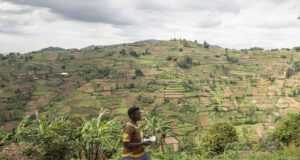
While the country is landlocked, it is famously known for its breathtaking scenery, caustic soils and its quality of tea.

There are over 100 hotels in the city including big names like the Marriott and The Hilton.

The country is building a good relationship with tourists.

 Rwanda has become the most sought after wildlife destinations due to conservation of its faunas.

Must-do experiences in Rwanda:

Coffee tasting

Internationally Rwanda is regarded as the best coffee in East Africa, it ranks amongst the best globally. They export nearly 99% of their coffee. When you head there, try Shokola Café, a trendy spot in the city of Kigali.

Fashion

The people of Rwanda are known for their sense of style and always looking well represented. So when you are exploring the city make sure you look sharp. Pop in at the Kimoronko Market in Kigali for some colourful fabrics. You will even spot a few clothing items you might like at the market.

Street Art

When you are travelling around the city you will see bright artworks on the walls with positive messages. There are boutique shops where you can buy the local art and crafts like the Go Kigali Boutique .

Gorilla trekking

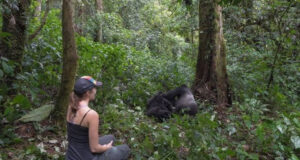
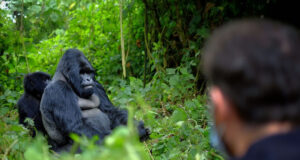
Rwanda has three main wildlife destinations; the Volcanoes National Park, Nyungwe Forest National Park and Akagera National Park. Mountain gorillas are found within the Volcanoes National Park and gorilla trekking is the most popular adventure activity that attracts most travelers to Rwanda.

Every day, a group of eight people are allowed to spend an hour with the gorillas. Mountain gorilla is one of the major reasons travelers visit Rwanda. Surely you would want to experience it too!

With so many good things about Rwanda mentioned above, from being the safest, cleanest country to having the best coffee in the world. Why would not want to include it on your travel bucket list?

Visit Rwanda quickly before the crowd arrives!

The Best Wine in the Seychelles

0

This is not your ordinary kind of wine. So if you’re visiting the Seychelles islands, having a taste of their traditional drink if a must! Palm wine is made and drunk in various countries across the world. It is an alcoholic drink made from the sap of different palm trees. In Seychelles it is known locally as ‘calou‘, ‘kalou‘, or ‘toddy‘.

Look up into the palm trees here and you might see a bottle hanging down. It’s almost certainly not there by mistake, most likely its being used for palm wine.

The bottles used are generally not at all fancy, just a plastic bottle of any kind is what you’ll usually see.

In Seychelles, two parts of the tree are used to make calou – either the top of the tree in what is known as the spathe, or in the roots which supposedly makes a stronger wine.

Drinking straight from the tree as was traditional, the wine is warm and sometimes quite hot. This definitely adds to the alcohol buzz. If you chill it in the fridge for a little while its a lot more drinkable and it’s best to drink it within a day or two.

Where to drink palm wine

Palm wine is not something you’re going to find in any restaurants, but you can go to the Praslin Museum where they do demonstrations on how to tap palm wine. You’ll get a glass of it too if you are feeling brave enough to try it. You can also sometimes find it being sold in markets or food stalls.

Getaway Show Enthrals Visitors

0

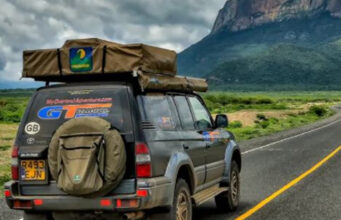
The 23rd installation of the annual event blew people’s minds away and left them yearning for more. From an inaugural (exciting) pimp-your-bakkie-for-travel competition to spectacular game reserve attractions, the Getaway Show (sponsored by Dunlop, Getaway Travel and Airlink) had visitors smiling from ear to ear with sheer exuberance written all over their faces.

Held at The Ticketpro Dome in Northgate from 4-6 October 2019, the venue was packed to capacity with more than 100 exhibitors strutting their stuff including affordable travel packages, destinations, accommodation, outdoor gear, 4×4 products and accessories, motor homes, caravans, camping equipment and adventure operators. The event is a brand extension of the illustrious travel and tourism magazine, The Getaway.

The show has been giving travellers a taste of adventure, fun and experience in a lively atmosphere for the past 23 years. The event’s organiser and operations manager, Nasreen Abrahams said despite some challenges, the show ran smoothly this year.

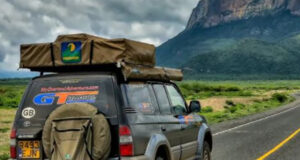
One of the main attractions was an exhilarating competition in which visitors battled it out for a once-in-a-lifetime opportunity to have their car fitted with the modern top-of-the-range travel accessories. The extreme makeover, almost akin to the Pimp My Ride show, was to the tune of whopping R177 000.

The event also featured travel talks awareness, travel bag packing tips, showcasing game reserves as well as Indonesian cultural expeditions. “The event has improved in terms of activations and marketing. We’re planning on getting the youth into the show next year for contiki student tours. This is a big project that will be finalised for the upcoming show,” said Abrahams.

Among exhibitors was KwaZulu-Natal (KZN) Tourism, taking visitors and attendees on a breathtaking experience of bungee jumping through a 3D simulation! The simulation exercise also extended to riding the “waves” on the surfing board and cycling on some beautiful KZN mountain. “The experience was amazing! It felt like I was bungee jumping for real. I could feel them pulling me up by the rope after I was done,” remarked one of the visitors.

There was also a wide range of travel opportunities and ideas for everyone… from families to adventurers and aspirant globetrotters. For those seeking to travel the world, travel agencies were on hand to offer them advice and tips. Caravan and camping equipment was there for those who love to relax or have fun in nature. The show was also characterised by live music, fun family activities and a beer tent for folks who sought to quench their thirst.

One of the sponsors said they would definitely be coming back next year, and that their association with the show would remain intact for years to come. “From last year, we saw an opportunity to do sales – sell some tryes, activate an engagement to capture consumer details to build a database and ensure more brand awareness,” said Shailesh Signh, Dunlop’s Trade Marketing and Motorsports Manager. Alex Smith of Eco4x4Africa has been exhibiting at the vent for the past 10 years. “People only trust you when they see you and experience what you tell them,” said Smith.

The 2020 Getaway Show promises to be even bigger and better. Guess what? The next year’s show will feature new out-of-this-world attractions for the youth! Watch the space for more information.

Why Your Next Adventure Should Be a Train Trip on TAZARA

0
TAZARA Train

Looking for your next adventure? Central and Northern regions of Zambia have some of the best tourist sites in the country, from the national parks to the waterfalls. To see what the area has to offer, consider taking a train on the Tanzania-Zambia Railway Authority (TAZARA), which has operated between Zambia and Tanzania since 1975. It is among the most affordable ways to see Central and Northern Zambia.

It’s Affordable

A one-way, first-class ticket on a TAZARA express train from New Kapiri Mposhi station, Central Province, to Dar es Salaam, Tanzania, costs 333 Zambian Kwacha, approximately $34 USD. The cost of the ticket includes bedding, toiletries, and bottled mineral water. A second-class sleeper ticket is 272 Kwacha, which is approximately $28 USD, and a second-class seat is 252 Kwacha, about $26 USD. For a third-class seat, expect to pay 233 Kwacha, or approximately $24 USD. For the ordinary (non-express) train, tickets are about 15% cheaper.

Sleeper compartments accommodate four people and do not mix sexes, so it is advisable to book a whole compartment if traveling with men and women or as a family. Check the timetable on the website to plan your trip, but travelers should be aware that the trains from New Kapiri Mposhi station to Dar es Salaam often experience delays, sometimes for an entire day. Be sure to bring extra blankets, a change of clothes, extra tissue, wipes and enough food to last the journey (though food may be purchased onboard).

It Has Beautiful Scenery

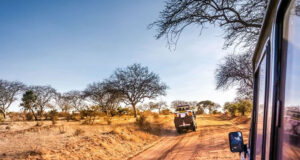
Depending on the season, the view might include lush green bushes on the Zambia side. The Tanzania side offers opportunities to see wildlife, such as giraffes, zebras, elephants, and antelopes in the Selous Game Reserve. Other areas rich in wildlife along the route include Udzungwa Mountains National Park and the outskirts of the Mikumi National Park.

Great Stops Along the Way

TAZARA stops at such towns as Serenje, Mpika, and Kasama, which are filled with tourist sites, including waterfalls, national parks, and national heritage sites. Passengers must purchase a ticket for each stop. As the train doesn’t make frequent stops at each station, plan your stops in advance, or be sure to arrange alternate transport for your return.

The journey on Tazara

The town of Serenje is the 11th stop on the route from Kapiri Mposhi to Dar es Salaam. It is a great place to get off the train and explore.

Kasanka National Park
At Kasanka National Park, visitors might see a variety of animals, including hippos and various antelope species, such as the puku, waterbuck, sitatunga, and reedbuck. If traveling between October and December, spend a few days at the park and witness the annual bat migration. While here, make the journey to The Livingstone Memorial, where the heart of Scottish explorer Dr. David Livingstone was buried after his death in May 1873. International park fees are $8 USD per person per day.

Kundalila Falls

On the edge of the Muchinga Escarpment, the Kaombe River cascades over rocks, creating the Kundalila Falls. Visitors can enjoy swimming in its deep natural pool, which feeds into a botanical garden. The nearby forest offers a chance to see blue monkeys, and the views of the Luangwa Valley are beautiful. There is a nearby campsite with long-drop toilets and shower facilities, as well as a grill. Kundalila Falls is approximately 40 miles (64km) past the Serenje turnoff and about six miles (9.7km) past the turn for Kasanka. Then, it is approximately nine miles on a dirt track to the falls. Entrance is $15 USD per person, as is access to the campsite.

Nsalu Caves
The Nsalu Caves are approximately 40 miles (60km) north of Serenje. This area is believed to have been a settlement of the San tribe, but the most unique aspect of the caves is the rock paintings that differ from the stick figures and animals usually associated with the tribe. Here you’ll find abstract patterns, lines and outlines that, in some cases, are believed to be more than 100,000 years old. The entry fee is approximately $15 USD.

Shiwa Ng’andu
Overlooking the granite hills that form the tail end of the Great Rift Valley in Muchinga province is a manor house called Shiwa Ng’andu. English soldier Sir Stewart Gore-Browne built the manor, completing construction in 1932. Located between Mpika and Chinsali, tours are offered from 9-11am and cost $20 per person. Visitors should also stop by Kapishya hot springs, which are on the same estate.

Get to Meet People
Traveling by train for a few days is a great way to meet people, and TAZARA is no exception. With tourists and locals using this form of transport, there are many opportunities to make new friends.

The African Woman Who Inspired Pablo Picasso

0

You may not have heard of her, but she is one of Algeria’s most celebrated artists. Baya Mahieddine is famous for the iconic work that would inspire Picasso to paint a collection called Women of Algeria. As a self-taught artist, Baya retained the connection to ‘tribal’ art that so fascinated the Western world, and actively rejected any form of classification, instead drawing on personal memories and experiences.

Born in Algeria in 1931, Baya’s life was far from easy. Orphaned at the age of five, she was raised by her grandmother. Unable to attend school, she worked as a servant for a French woman named Marguerite Camina, who would later be described by the artist as her adoptive mother. Camina noticed the talent that her young servant displayed in making figures from clay, and encouraged her to develop her craft. Instead of following the typically Western models of art production that were being taught at the time, the young Baya drew on her own personal experiences and imaginings, alongside the traditional tribal art of Algeria.

Sharon Obuobi describes Algeria’s visual culture as boasting ‘intricately designed traditional textiles, ceramics, gardens, and architecture’, and these motifs reoccur in Mahyeddine’s paintings. Her clay figures are said to have inspired the fluid forms and figures she painted, giving her works their unique aesthetic that was so influential to artists like Picasso and Matisse.

By the time she was 16, Mahyeddine had her first exhibition in Paris. This is where her influence on artists such as Picasso is first noted. Picasso’s interest and fascination with African tribal art (and masks in particular) is well known. His graphic cubist style is attributed in part to his curiosity in traditional African forms of representation, at that time presented in Europe in the form of curios and artifacts rather than artworks. Mahyeddine was an exception to this. She was not creating tribal curiosities, but allowing her environment and imagination to shape her work.

Inspired by her spontaneity and natural talent, Picasso invited her to work with him in 1948. She was the elusive ‘untaught’ artist that gave Picasso fresh perspective. Picasso’s Women of Algeria series is said to be inspired by Mahyeddine, although it was painted after their time spent working together. Just as the young Mahyeddine’s influence on Picasso is evident, his influence is felt in many of her works. According to Sotheby’s ‘Picasso nurtured Baya’s aesthetic – particularly her use of color and line, while Baya’s cultural vitality served as creative lifeblood for Picasso’.

Like Picasso, Andre Breton was greatly inspired by Baya’s work. He found the bold colors and strange figures of her works revealed surrealist and dream-like qualities. He defined her work as Surrealism, and this view was widely held for a long time. Modernist critics used surrealist ideas of dream-like figures and the fascination with ‘naive’ art as a lens through which to view Mahyeddine’s work. This mindset is attributed to the problematic viewpoints at the time, which were ‘dominated by orientalism and the exoticisation of the world that Baya, the woman and artist, came from’.

But the artist refused to define herself using the terminology of the Western canon. She created work that was deeply personal, rooted in her childhood and her home. As Sana Makhoul asks in her research paper on the artist, ‘Why do we have to define and categorize artwork from non-Western cultures by imposing on them Western definitions and terminology?’

Baya married celebrated Andalusian composer Mahyeddine Mahfoudh in 1953. He’s credited with inspiring many of the instruments that appear in her works, as well as what many people see as the melodious and harmonious atmosphere that her works seems to evoke.

One year following her marriage to Mahfoudh, Baya stopped painting, only returning to her artistic practice in the late 1960s. The reasons for this break vary; some say it was to show solidarity with the revolution in Algeria, others that it was to raise her children. Whatever her reasons, the hiatus was temporary. From the 1960s on she continued to create works until the end of her life. Her rich, opulent paintings combine influences of traditional Algerian art, like ceramics and bold wall murals, with flowing figures and objects. Birds and animals combine with objects like instruments and fruit to create works that seem to be laden with symbolic meaning. Her pieces don’t follow any rules, continually denying the classifications forced onto them.

In the late 1990’s, nearing the end of her successful artistic career, Baya was amongst many Algerian artists that the French colonisers attempted to ascribe to French culture. Instead, she is credited for proclaiming her Algerian identity, evidenced by her refusal to leave the country during political instability, despite an invitation from France. Braving political and social instability, Baya could not bear to leave the home that had inspired her joyous paintings. She was an Algerian artist at heart – clearly the only personal and artistic classification she was happy with. She died in 1998, and remains a celebrated artistic figure around the world.